
CAD Projects
Point-of-Care Diagnostics Device: Industrial Design & CAD Realization
Project Highlights
Functionality: The device is designed to provide immediate, actionable health data, as suggested by the multi-parameter display featuring real-time vital signs (e.g., heart rate shown by the ECG trace, temperature, and other metrics). This is critical for efficient patient assessment in diverse clinical or field settings.
Ergonomics and Usability: A key design focus was usability and portability. The rendered images demonstrate a compact, angled form factor that is easy to view on a tabletop or flat surface, ensuring maximum screen visibility and stability. The vibrant, high-contrast digital interface is clearly visible, optimizing readability for medical professionals under varying lighting conditions.
CAD Realization: My work involved the complete 3D modeling and rendering of the device’s enclosure and key components. This process required meticulous attention to detail to ensure manufacturing feasibility (Design for Manufacturing – DFM) while maintaining the sleek, modern aesthetic and robust construction required of a medical-grade device. Specific CAD challenges included developing the integrated stand mechanism and modeling the seamless fit for the internal electronics and display components.
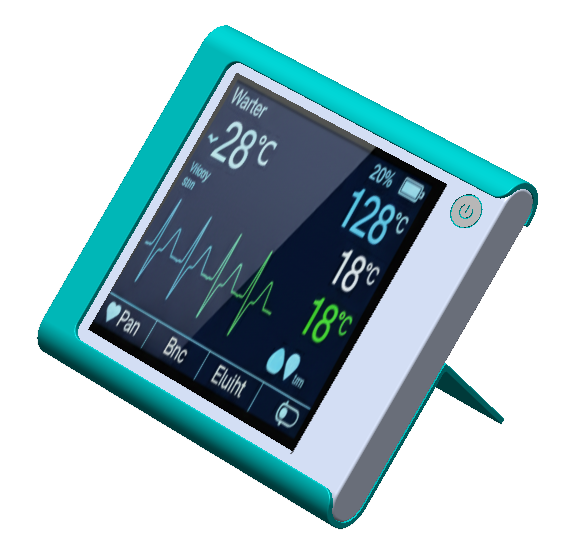
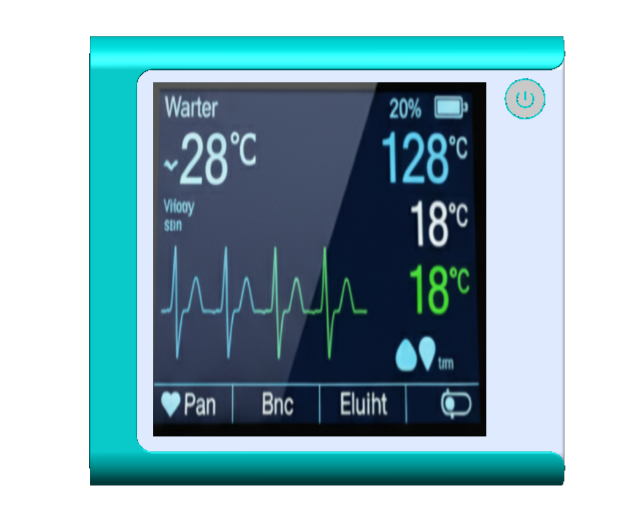
Rapid Diagnosis Panel - Industrial Design & User Interface Integration
This project focuses on the industrial design and advanced CAD modeling of a compact, next-generation device dedicated to rapid diagnostic analysis.
Project Highlights
-
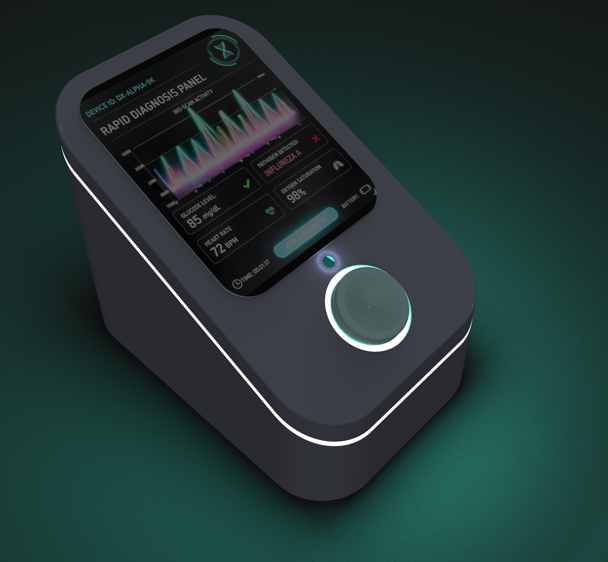
Design Philosophy (Minimalist & Modern): The device features a sleek, monolithic enclosure with soft, rounded edges and a contrasting light strip , which gives it a futuristic, professional, and easily identifiable presence in a clinical setting. The simple form factor emphasizes portability and countertop efficiency.
-
Intuitive Control Scheme: A core design element is the prominent, illuminated rotary dial (or control knob). This type of interface suggests a focus on quick, tactile control and selection, which is critical in time-sensitive medical applications where gloves may be worn. The integration of this physical control alongside a touchscreen display is a classic move to balance digital flexibility with physical precision.
-
CAD and Manufacturing Focus: The design process utilized advanced surface modeling techniques to create the seamless, matte-finish enclosure. A key aspect of the CAD work was designing for the integration of the internal components (display, battery, control dial mechanism) while maintaining tight tolerances and ensuring the aesthetic light feature could be practically manufactured (e.g., using light pipes or backlighting a translucent layer).